How to Consolidate Heavy Shipments for Cost Savings
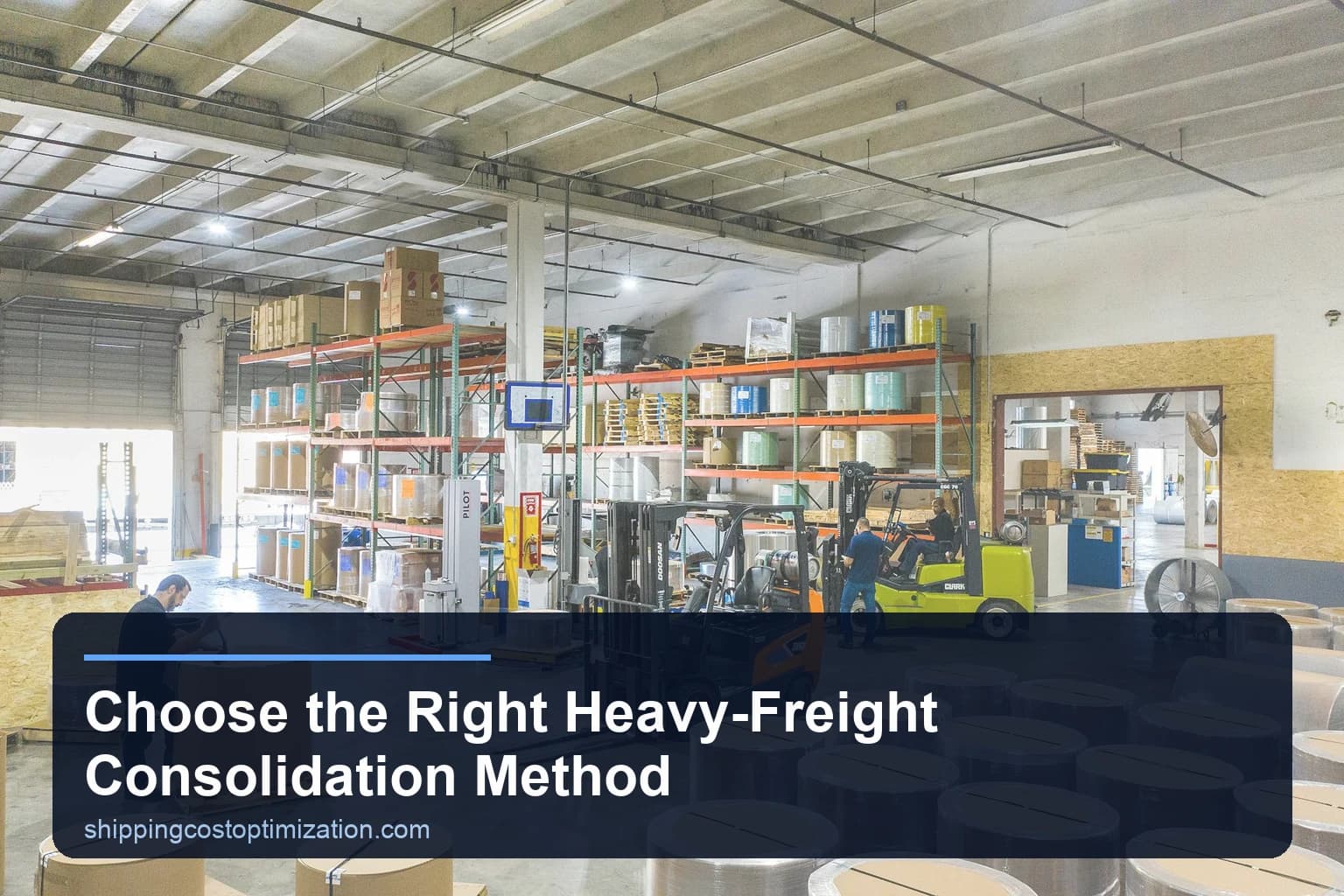
Consolidating heavy shipments means combining multiple heavy packages or pallets into fewer shipments to reduce shipping costs and improve efficiency.
Put simply, you replace many small, separate moves with one larger move. For heavy freight that often means building one full truckload out of multiple LTL-ready pallets, or linehauling freight to a pool point, then delivering locally. The goal is fewer base charges and accessorials, fewer touches, and faster, cleaner transit.
Most businesses see savings once they consistently ship multi-pallet orders or have many orders going to the same region. Consolidation also helps control service outcomes like on-time delivery and damage rate, since cargo spends less time bouncing between terminals.
Why Consolidate Heavy Shipments#
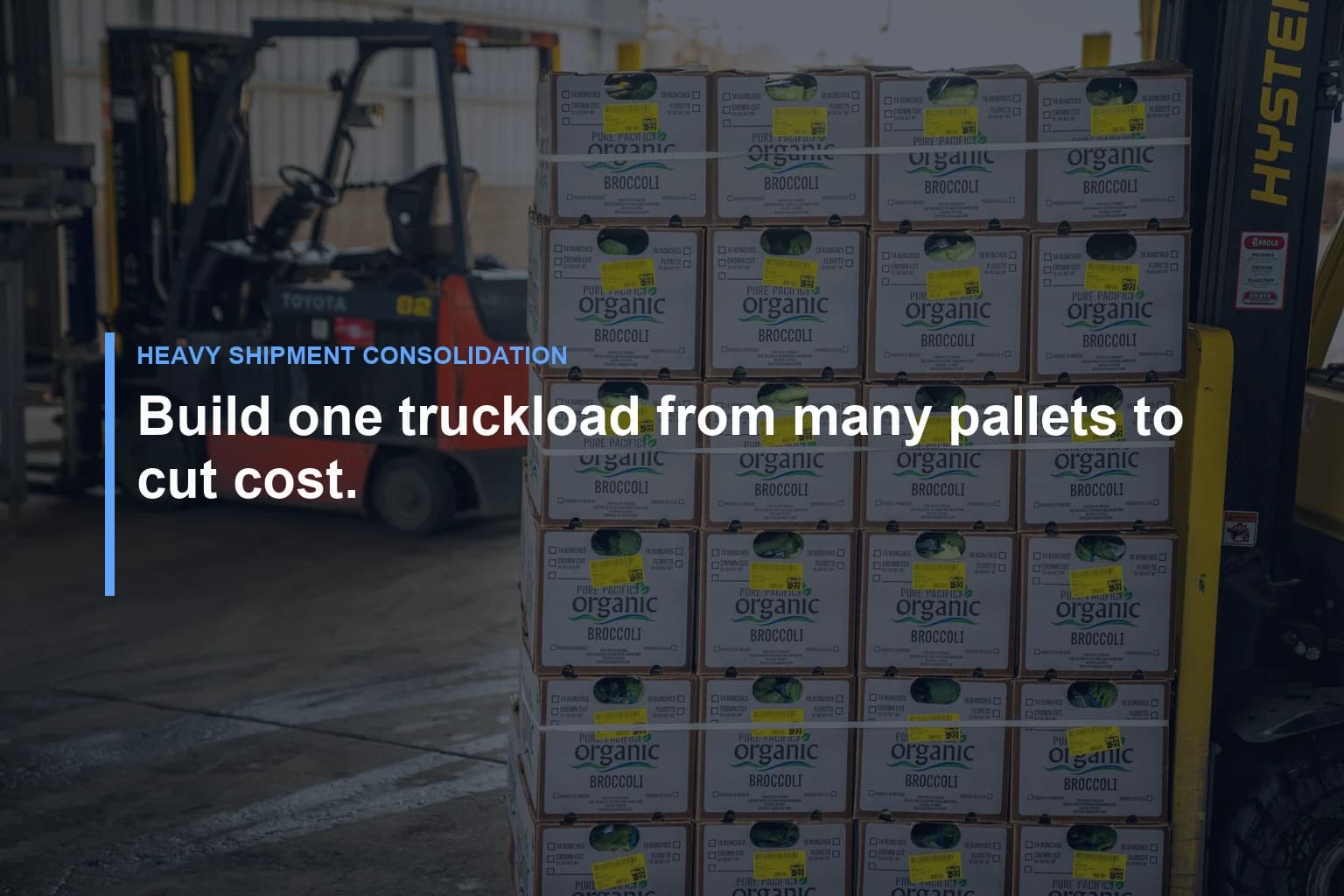
You consolidate to lower total cost, reduce handling risk, and improve speed on long-haul lanes. In fragmented LTL networks, a cross-country pallet is often unloaded and reloaded several times, which adds time and damage risk. Consolidated truckloads typically make far fewer stops and move directly, so they arrive faster with fewer touches.
Industry data shows a common pattern on cross-country lanes. Freight that is cross-docked several times can take about 6 to 10 days door to door. A consolidated truckload often arrives in roughly 2 to 3 days on the same lane. Fewer handling events also cut breakage because a consolidated load may only be handled at origin, a consolidation hub, and destination, not at every intermediate terminal. If you currently rely on air for heavy urgent moves, shifting to consolidated ground can also reduce emissions, since air shipments emit about six times more CO2 than comparable ground moves.
- Cost: one linehaul instead of many minimum charges, fewer duplicate accessorials, better trailer utilization.
- Speed: direct linehaul legs avoid multiple terminal stops, so long-haul transit tightens.
- Risk: fewer touches reduce the chance of loss or damage.
- Control: appointments and pooled local delivery improve on-time performance to consignees with tight receiving windows.
- Sustainability: more freight per truck and less reliance on air lowers emissions.
Methods To Consolidate Heavy Shipments#
There is more than one way to consolidate heavy freight. The right method depends on volume, consignee geography, and time sensitivity. Most small to mid-sized shippers do this through a 3PL or consolidation provider that aggregates freight on set schedules.
- Origin consolidation to FTL: combine your LTL-ready pallets into a single full truckload at your dock or a nearby cross-dock, then ship direct.
- Hub consolidation: send pallets to a regional consolidation hub where multiple shippers’ freight is co-loaded into an efficient linehaul.
- Pool distribution: linehaul a full truckload to a destination pool point near consignees, then break bulk and deliver locally.
- Milk run pickup: a dedicated truck collects pallets from several nearby facilities on a route, then builds an FTL for the linehaul.
- Schedule-based consolidation: ship on fixed cutoffs, for example every Tuesday and Thursday, so orders accumulate into economical loads without holding freight too long.
How Pool Distribution Works For Heavy Freight#
Pool distribution is a destination-side strategy. You move freight by full truckload to a pool point close to your delivery region, then sort and deliver final mile in short local runs. It blends the cost efficiency of TL on the long-haul with the delivery density of a local network.
- You build a pooled TL at origin with cartons or pallets bound for the same metro or region.
- The truckload linehauls directly to a pool facility near your consignees.
- The pool point breaks bulk, sequences stops, and loads local trucks for delivery by zip cluster or route.
- Accessorials like liftgate or appointment delivery are handled once on a local run, not multiplied across long-haul LTL bills.
- Visibility and control improve because the pool sets delivery windows and manages exceptions within a small geography.
Cost Benefits Of Consolidation And Pool Distribution#
Heavy freight cost stacks up through base charges, minimums, and accessorials. Shipping ten 1,000 lb pallets as separate LTL shipments creates ten base charges and ten sets of accessorials. Consolidating those pallets into one FTL typically replaces all that with one linehaul and a handful of local delivery charges, which lowers the per-pound rate. On long-haul lanes, the savings are amplified and service is faster because the linehaul runs direct.
Touch counts matter too. In many LTL networks a pallet can be unloaded and reloaded 4 to 5 times on a cross-country trip. A consolidated move often gets handled only at origin, sometimes at a consolidation hub, and at destination. Fewer touches mean lower damage risk and less rework. If you sometimes move heavy items by air to hit service targets, shifting to consolidated ground reduces cost and cuts emissions, since air shipping produces about six times the CO2 of trucking.
For parcel-sized but heavy items, consolidation can also help avoid repeated oversize surcharges and dimensional weight charges. Parcel carriers use DIM weight with a common domestic divisor of 139, so a large, not-dense box can bill out higher than its scale weight. Moving such items on a pallet within a consolidated load can sidestep those parcel penalties.
Here is a compact comparison of typical tradeoffs.
| Approach | How it moves | Relative cost at scale | Typical transit on long-haul lanes | Risk profile | When it fits |
|---|---|---|---|---|---|
| Direct shipping (each order) | Separate parcel or LTL per consignee | Highest | Cross-country LTL about 6–10 days | Most touches, higher damage | Low volume, sparse geography, must ship same day |
| Consolidation (FTL linehaul) | Many pallets combined into one direct truckload | Lower | Cross-country TL about 2–3 days | Few touches, lower damage | Multiple pallets to same lane, predictable cutoffs |
| Pool distribution | FTL to destination pool, then local delivery to consignees | Lowest in dense zones | 2–3 day TL linehaul plus local run | Few long-haul touches | Many consignees in one region, need delivery scheduling |
Simple planning cues:
- If your combined volume reliably fills 70 to 100 percent of a trailer by weight or cube, FTL consolidation usually beats multiple LTL bills.
- If you ship to many customers in one metro or region, pool distribution often beats both direct LTL and one-by-one parcel for total cost per stop.
- If freight is urgent and light, parcel air can be fastest, but for heavy freight a consolidated ground move often meets service with far lower cost and emissions.
Common Challenges And Mistakes In Heavy Shipment Consolidation#
Consolidation works only if execution is tight. The common pitfalls are avoidable with good data, scheduling discipline, and clear rules of engagement with carriers and 3PLs.
- Holding freight too long: chasing a perfect trailer fill increases lead time. Set maximum dwell targets by SKU or customer and ship on fixed cutoffs.
- Wrong freight class or poor specs: misclassified NMFC classes, missing dimensions, or bad weight data trigger reclass and rebills. Capture scale weight and true cube, and audit bills.
- Ignoring cartonization and DIM: large, not-dense items can bill high on parcel due to the DIM divisor of 139. Palletize or re-pack to improve billable weight and stability.
- No appointment planning: heavy receivers often require appointments. Coordinate pool point capacity and consignee windows to protect on-time delivery.
- Visibility gaps: without ASN-level tracking through the hub or pool, exceptions spread. Use stop-level EDI or API status and reconcile by PRO or BOL to keep control.
Frequently Asked Questions#
What Is The Cheapest Way To Ship Large, Heavy Items?#
For recurring heavy moves, the lowest total cost often comes from consolidating pallets into a full truckload or using pool distribution when you have many deliveries in one region. If you have a single heavy shipment, compare a volume LTL quote against a partial truckload. Parcel rarely wins once oversize surcharges and dimensional weight kick in, and air is usually the most expensive for heavy freight.
What Are The Three Methods Of Consolidation?#
Common methods are origin consolidation into a full truckload, hub consolidation where freight from multiple shippers is co-loaded at a cross-dock, and pool distribution where you send a full truckload to a destination pool point, then deliver locally.
What Is The Process Of Shipment Consolidation?#
Plan cutoffs, collect accurate weights and dimensions, and stage freight by lane or region. Build loads to balance weight and cube, secure with appropriate dunnage, and tender a direct linehaul. If you use pool distribution, the destination pool breaks bulk, sequences local routes, and books appointments. Track by BOL or PRO through both the linehaul and final mile, then audit charges and damage claims to refine future builds.